Loading page content
Landlord insurance
Compare top carriers side by side in a few minutes, with your coverage explained in plain language. No sales calls, and a licensed agent reviews your policy before it's issued.
For rental properties with one to four units, including a multi-family home where you live in one of the units.
Now available in New Jersey · Hablamos Español · Falamos Português
Own a single-family home you live in? See Home insurance. Renting a place? See Renters insurance.
Tracking your tenants' renters insurance? See the landlord portal.
What landlord insurance covers
A regular home policy usually stops covering a property once you rent it out. A landlord policy is built for that. Here's what it does.

The building
Pays to repair or rebuild the property, and structures like a garage or fence, after damage from things such as fire, wind or a fallen tree.

Lost rent
If a covered loss such as a fire leaves the property unlivable, this replaces the rent you'd have collected while it's repaired. It doesn't cover a tenant who stops paying.

Liability
If a tenant or visitor is hurt on the property and you're responsible, this pays their costs up to your limit.

Your appliances and furnishings
Can cover things you own and keep at the property for tenants to use, such as appliances or furniture.
These are general descriptions. Your policy sets exactly what's covered. Your tenants' belongings, flood damage and earthquake damage are not part of a standard landlord policy.
How your coverage is set
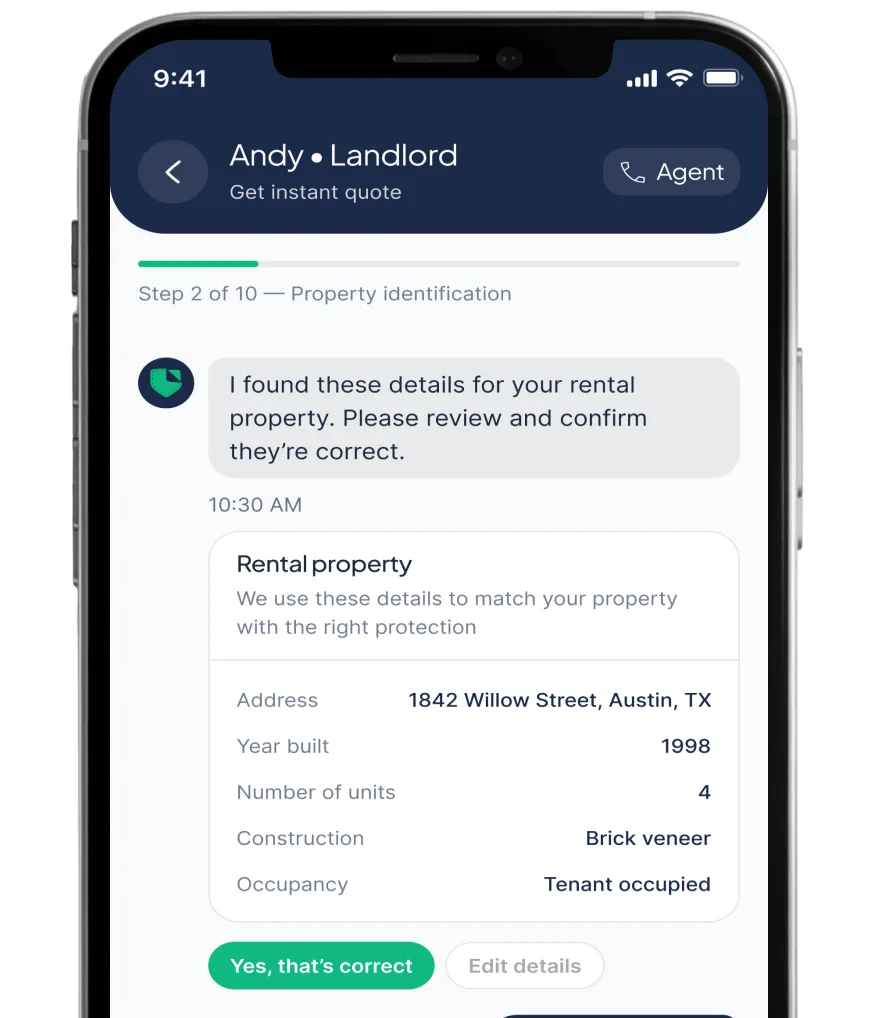
Landlord insurance is built around what it would cost to rebuild the property, which is usually different from what it would sell for. We estimate that from the details of the property, fill in what we can, and you confirm it. You don't have to guess at a number.
Your situation

Your lender needs proof of insurance before closing. Once your policy is issued, just ask and we send it to them directly.

Own a two- to four-family home and live in one unit? This is the right policy for it, and it covers the whole building, including the units you rent out.

If your insurance is paid through your mortgage, we bill your mortgage company for the new policy. Keep your old policy until the new one starts.
Why PolicyPocket for landlords
Buying the policy is the easy part. Here's what we handle afterward.
01
When your mortgage company needs proof of insurance, ask us and we send it to them directly, so you aren't chasing paperwork.
02
Carriers often inspect a rental property or ask for documents in the first weeks of a policy. We follow those requests and walk you through them.
03
Landlord insurance renews once a year, and the price can change. When yours comes up, we check it against our other carriers and show you if there's a better price for the same coverage.
FAQ
Yes. Quotes are free, and there's no obligation to buy.
Rental properties with one to four units, including multi-family homes where the owner lives in one unit. We don't cover short-term or vacation rentals.
Usually not. Most home policies are written for a home you live in, and coverage can change or end once it's rented out.
No. Tenants need a renters policy of their own for that, and we offer those too.
Sudden, accidental damage, such as a kitchen fire, is generally covered. Normal wear and tear isn't, and damage a tenant causes on purpose often isn't either.
Let us know. Many policies limit coverage when a property sits empty for an extended time, and a licensed agent can explain how yours handles it.
Yes. Tell us your closing date when you start. Once your policy is issued, we send proof of insurance to your lender on request. On a new purchase, lenders require the first year to be paid in full.
Yes. Your old insurer will usually refund the unused part. If your insurance is paid through your mortgage, we bill your mortgage company for the new policy.
No. Flood damage needs a separate policy.
It's free, it takes a few minutes, and you won't get a single sales call.
Quotes are estimates and subject to carrier underwriting.